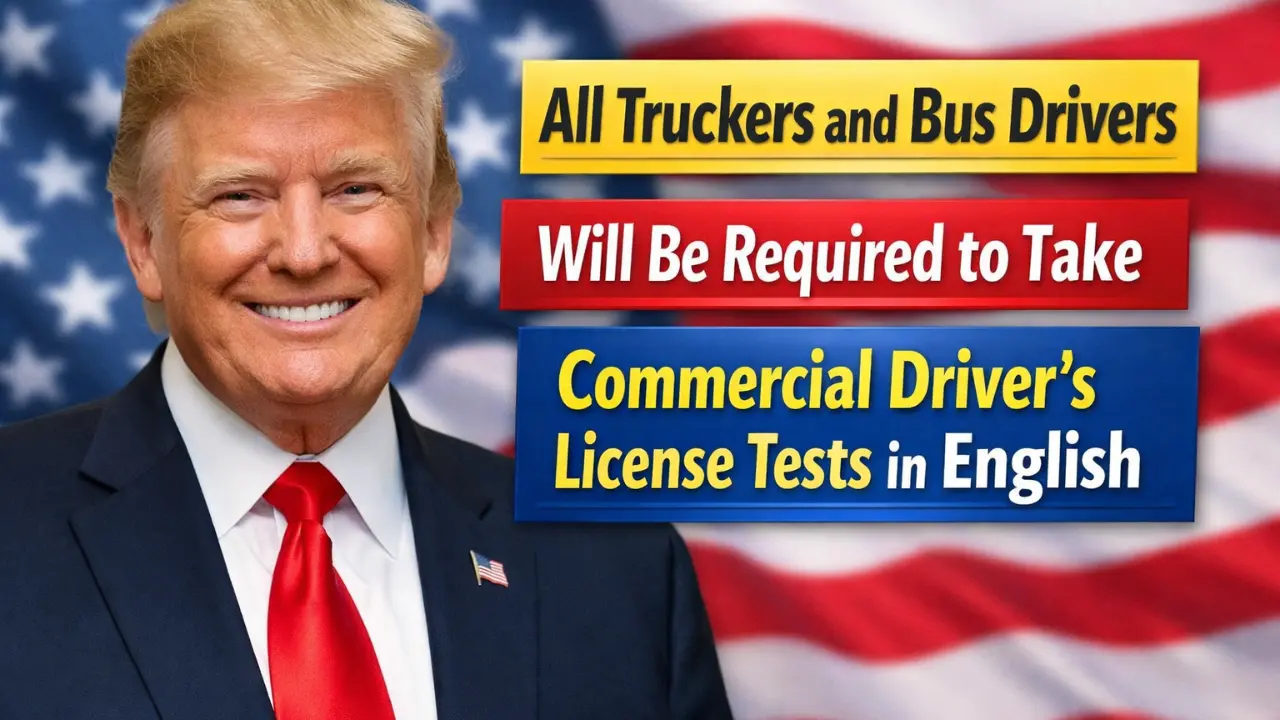
The United States government is tightening safety standards in the commercial transportation industry with a major policy shift requiring truck and bus drivers to take commercial driver’s license tests in English. The initiative is part of a broader effort by federal transportation officials to ensure that drivers operating heavy vehicles on American roads can properly understand traffic laws, read road signs, and communicate effectively with law enforcement and safety authorities.
The policy reflects growing concerns about road safety, driver qualifications, and regulatory enforcement across the trucking industry. Officials argue that stronger language requirements will help reduce accidents, improve communication during inspections, and ensure that commercial drivers meet federal safety standards.
The rule will affect thousands of current and future drivers seeking commercial licenses across the United States and is expected to reshape how states administer CDL testing and driver qualification procedures.
Federal Push to Strengthen Commercial Driving Standards
The decision to require CDL tests in English comes as part of a nationwide safety crackdown targeting gaps in commercial driver training and licensing oversight. Transportation officials have stated that operating large commercial vehicles requires more than driving skill; it also requires the ability to understand highway instructions, safety regulations, and emergency communication.
Commercial trucks can weigh up to 80,000 pounds when fully loaded, meaning even minor mistakes can lead to severe accidents. Because of this, federal transportation authorities emphasize that drivers must be capable of reading traffic warnings, responding to law enforcement instructions, and understanding inspection procedures.
For years, federal rules required drivers to demonstrate basic English proficiency, but enforcement has been inconsistent across states. Some states allowed CDL tests to be taken in multiple languages, which officials now believe created gaps in compliance with federal standards.
Under the new policy approach, CDL knowledge and testing procedures will require English proficiency to ensure drivers can operate safely on U.S. roads.
Why English Proficiency Matters for Road Safety
Transportation officials argue that English proficiency is essential for several safety-related reasons.
Drivers must be able to read road signs, construction warnings, and highway alerts that are written in English across the United States. They also must communicate with police officers, highway inspectors, and emergency responders during traffic stops, accidents, or safety inspections.
Without clear communication, misunderstandings can delay emergency responses or increase the risk of accidents.
Safety regulators say that commercial drivers routinely interact with federal and state agencies responsible for monitoring transportation safety. These interactions often require drivers to explain cargo details, review logbooks, and answer questions about driving hours or safety procedures.
If a driver cannot communicate clearly, inspectors may be unable to confirm whether regulations are being followed.
Concerns Raised After Fatal Highway Accidents
Recent highway crashes involving commercial vehicles intensified calls for stricter oversight in the trucking industry. Several incidents across the country highlighted concerns about driver qualifications and training standards.
In one highly publicized accident, a truck driver performed an illegal maneuver that resulted in a collision causing multiple fatalities. Investigations revealed questions about whether the driver met licensing and safety requirements.
Another crash involving a commercial truck killed several members of a community traveling in a passenger vehicle. These tragedies sparked national attention and increased pressure on federal regulators to improve enforcement of trucking regulations.
Transportation officials say such incidents demonstrate the importance of ensuring that commercial drivers meet all federal safety qualifications before being allowed on the road.
States Previously Offered CDL Tests in Multiple Languages
Before the federal push for stronger enforcement, several states allowed CDL exams to be administered in languages other than English. Some states offered the written knowledge test in numerous languages to accommodate drivers from diverse backgrounds.
While this approach was intended to expand workforce opportunities, federal officials now argue it may have weakened the enforcement of English language requirements already present in federal regulations.
Transportation leaders say the new emphasis on English-only CDL testing is intended to align testing procedures with existing safety expectations for drivers operating commercial vehicles nationwide.
Enforcement Actions Across the Trucking Industry
The language requirement is part of a broader federal campaign targeting safety issues in the trucking sector. Regulators have increased inspections, compliance reviews, and investigations into commercial driver training programs.
Recent enforcement efforts have included nationwide inspections and reviews of driver qualifications. These inspections resulted in hundreds of drivers being removed from service because they were unable to demonstrate adequate English communication skills.
States are also being encouraged to verify language proficiency during traffic stops and roadside inspections. Drivers who cannot communicate effectively may be disqualified from operating commercial vehicles until they meet federal requirements.
Crackdown on Unsafe Driving Schools
Another major component of the federal safety campaign focuses on driver training schools responsible for preparing new commercial drivers.
Investigations found that some training institutions failed to meet required safety standards or provided inadequate instruction. Authorities determined that many schools were not properly evaluating drivers before recommending them for CDL certification.
As a result, federal officials identified hundreds of schools that failed to meet regulatory requirements. Many of these schools were ordered to close or faced the loss of certification to train new commercial drivers.
This move aims to ensure that drivers entering the workforce receive proper training in safety regulations, vehicle handling, and compliance with federal transportation laws.
Federal Inspections Reveal Safety Concerns
Recent inspections conducted by transportation authorities revealed significant issues related to driver qualifications and regulatory compliance.
The findings illustrate the scale of safety challenges regulators are attempting to address.
| Inspection Category | Result |
| Total inspections conducted | 8,215 |
| Drivers disqualified for language issues | Nearly 500 |
| Driving schools targeted for closure | 557 |
| Schools under review nationwide | About 16,000 |
Officials say these results highlight gaps in enforcement and the need for stronger oversight throughout the commercial driving industry.
The Problem of “Chameleon Carriers”
Beyond driver training and licensing issues, regulators are also addressing a long-standing problem involving fraudulent trucking companies known as “chameleon carriers.”
These companies often shut down after safety violations or crashes but quickly reopen under a different name and registration number. By changing their identity, they avoid penalties and continue operating without addressing safety problems.
Investigators have discovered cases where multiple trucking companies were registered at a single residential address, raising concerns about fraudulent business practices.
To combat this issue, transportation officials plan to strengthen registration procedures and increase audits of trucking companies. The goal is to prevent companies with poor safety records from reentering the industry under new identities.
Planned Reforms to Trucking Company Registration
Federal transportation agencies are working to improve oversight of commercial motor carriers by strengthening the registration process and increasing compliance reviews.
Currently, starting a trucking company can be relatively easy if operators provide proof of insurance and pay a registration fee. Critics argue that the process does not always involve sufficient safety checks before companies begin operating.
Under the proposed reforms, regulators intend to expand inspections and increase monitoring of electronic logging devices used by drivers to track working hours.
Officials also plan to conduct more in-person audits to verify that trucking companies comply with safety regulations and driver qualification standards.
Impact on the Trucking Workforce
The new language testing requirements may affect some segments of the trucking workforce, particularly drivers who previously relied on translated tests to obtain commercial licenses.
However, industry leaders emphasize that the goal is not to exclude drivers but to ensure that everyone operating heavy vehicles meets the same safety standards.
Truck drivers play a critical role in the U.S. economy, transporting goods across the country and supporting supply chains that deliver food, consumer products, and industrial materials.
Ensuring that drivers are properly trained and able to communicate effectively is viewed as essential to maintaining both safety and efficiency in the transportation system.
Key Facts About the CDL English Testing Requirement
| Topic | Details |
| Policy focus | CDL tests must be taken in English |
| Vehicles affected | Commercial trucks and buses |
| Reason for change | Improve road safety and communication |
| Enforcement method | Inspections and license qualification reviews |
| Additional actions | Closure of unsafe training schools and crackdown on fraudulent companies |
What the Policy Means for Drivers and States
States will play a crucial role in implementing the English-language CDL testing requirement. Licensing agencies will need to update testing procedures and ensure that exam providers follow federal standards.
Law enforcement officers will also continue evaluating drivers during roadside inspections to confirm they can communicate effectively and understand safety instructions.
For new drivers entering the industry, this policy will make English proficiency a clear prerequisite for obtaining a commercial license.
Conclusion
The requirement for truck and bus drivers to take CDL tests in English represents a significant step in the federal government’s effort to strengthen transportation safety. By focusing on language proficiency, improved training standards, and stricter enforcement against fraudulent companies, regulators hope to reduce accidents and ensure that drivers operating heavy vehicles are fully qualified.
The trucking industry remains a vital part of the U.S. economy, and maintaining high safety standards is essential for protecting both drivers and the millions of people who share the road with commercial vehicles every day.
As enforcement continues to expand, federal and state authorities will work together to ensure that commercial drivers meet the qualifications necessary to operate safely and responsibly across America’s highways.
FAQs
Why are CDL tests being required in English?
The requirement ensures that commercial drivers can read road signs, understand traffic warnings, and communicate with law enforcement officers during inspections or emergencies.
Does this rule apply to both truck and bus drivers?
Yes. The policy applies to all commercial drivers who require a commercial driver’s license, including truck drivers and bus operators.
Were CDL tests previously offered in other languages?
Yes. Some states allowed written CDL tests to be taken in multiple languages, but federal regulators believe this practice weakened enforcement of English proficiency requirements.
What happens if a driver cannot demonstrate English proficiency?
Drivers who cannot communicate effectively in English during inspections or licensing procedures may be disqualified from operating commercial vehicles until they meet federal standards.
How is the government addressing fraudulent trucking companies?
Authorities are strengthening registration procedures, increasing inspections, and conducting audits to prevent companies from reopening under new identities after safety violations.
Will the rule affect the trucking workforce?
The policy may require some drivers to improve their English skills before obtaining or renewing a CDL, but officials say the primary goal is to ensure safety and proper communication on U.S. highways.
Effective when?
They’ll should have to wear regular shoes when they are driving a commercial vehicle not barefoot with just socks and no TV shows on personal tablets or laptops at all either very unsafe and not being a professional truck driver either thank you Robert Phovemire I’ve been a truck driver for over 33 years and have seen several people driving a commercial vehicle barefoot or foot on dashboard which is very unsafe especially the Islam people which shouldn’t be driving a commercial vehicle
Yes! 💯
I honestly think that everyone should take the test in English including the Mexicans and the Asians as well none of them can speak English that well either.
I honestly think that everyone should take the test in English including the Mexicans and the Asians as well none of them can speak English that well either. And they should learn to follow rules of the road instead of speeding through construction zones and changing lanes without using turn signals I’ve seen many times they just whip over in front of other vehicles and they have to apply brakes because of it and especially learn how to use the mirrors as well.